💍 💔 LOVE IS BLIND, BUT YOUR MESS ISN'T: Important Decluttering and Organizing Tips to Master Your 'Experiment' 🥂

Updated: Jul 25
If you’ve binged Love Is Blind, you know the drill: the high-stakes Pods, the jaw-dropping Reveal, the blissful Honeymoon, and the chaotic reality of Moving In. It all leads to that one final question at the altar: “I do” or “I don’t?”
Believe it or not, your relationship with your home follows the exact same journey. Creating a space that actually works for you, not just one that looks good for the cameras, takes more than a few pretty baskets. Building a home you love requires brutal honesty, functional compatibility, and daily habits that won’t leave you jilted at the altar.
So ask and be honest with yourself: Are you building a lifelong connection with your space, or are you ignoring the red flags just to fit into an "aesthetic"?
Let’s dive into the organizing red flags and cleaning “I don’ts” we’ve gathered from every phase of the Love Is Blind experiment.
1. THE PODS PHASE: Decluttering Requires Deep Conversations
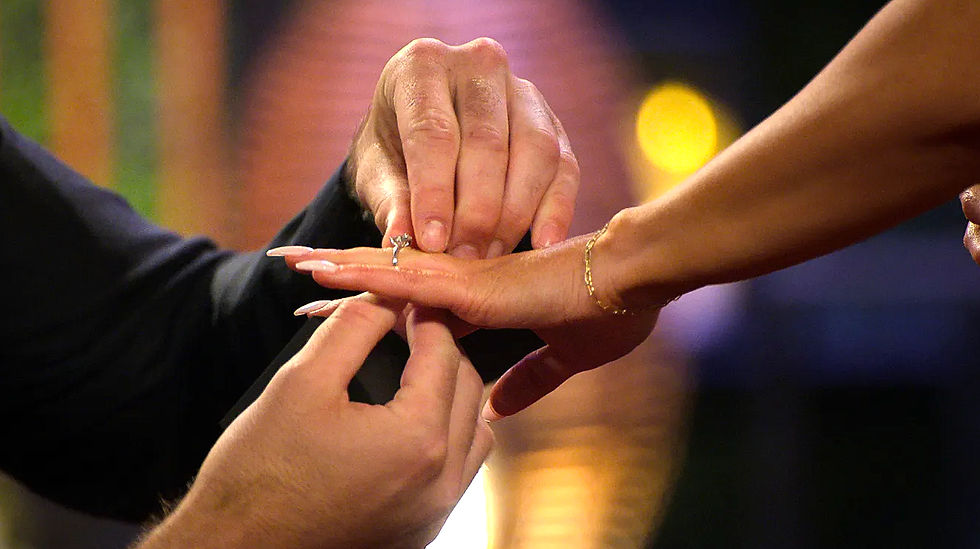
In the pods phase, the experiment examines the contestants' vulnerability. Contestants spend hours behind a wall, stripping away the surface to find out who they really are. They discuss their deepest fears, their 10-year plans, their "deal-breakers”, etc.
Decluttering requires that same level of raw honesty.
Before you run out to buy those famous gold goblets or a new set of acrylic bins, you have to have a "heart-to-heart" with your stuff. Many spaces stay cluttered because people skip the emotional labor and jump straight to the "Reveal" (storage solutions). But just like a pod romance, if there’s no foundation of truth, the relationship won't last in the real world.
Ask your items the tough questions (no wall required):
"Does this still fit the life I’m living now?" (Or are you holding onto a version of yourself that left the pods years ago?)
"Would I choose you again today?" (If you saw this item in a store right now, would you propose to it, or walk away?)
"Am I keeping you out of purpose, or just out of habit?" (Is this a soulmate or just a "safe" choice you're too scared to dump?)
🚩 The Red Flag: If you’re afraid to look in your "junk drawer" because you aren't ready for a "deep conversation" with what’s inside, that's a red flag.

2. THE REVEAL MOMENT: Visibility Changes Everything
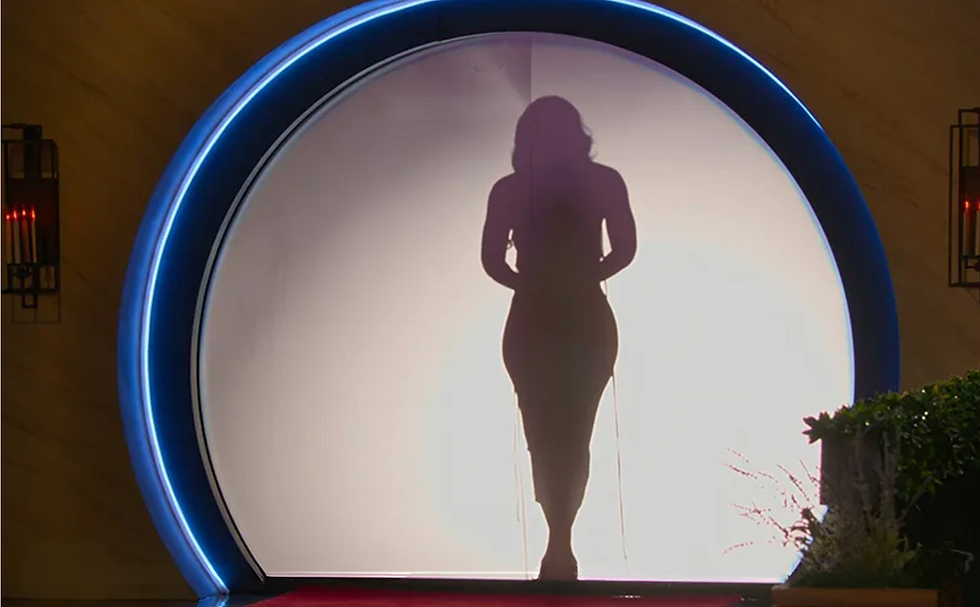
The Reveal is easily one of the most awkward moments on Love Is Blind. After days of pouring their hearts through a wall, the contestants finally step through the doors to face their new reality and meet their fiancé face-to-face for the first time. It’s the split second where the voice of the person they fell for becomes real.
Your home needs its own "Reveal" moment.
Clutter thrives in the dark. Many of our biggest organization "red flags" are just things we’ve successfully hidden from ourselves. When an item is tucked away in a deep, dark corner, it’s basically "ghosting" you—it exists, but you have no relationship with it.
Is your storage keeping secrets? Watch out for these Red Flags:
The "Bottomless" Cabinet: Deep shelves where Tupperware goes to die. If you can’t see the back, you’re essentially "blind" to your own inventory.
The Overstuffed Drawer: Drawers packed so tightly they won’t slide open. If it takes effort to see what’s inside, you’ll never actually use it.
The Mystery Bin: Opaque bins with no labels. These are the "secret exes" of the home. You forgot they were there until they pop up at the worst possible time (like the Reunion).
THE TRUE INDUSTRY SECRET:
Professional organizers make (and should always) make all inventory visible and easily accessible. When you can see every shirt, spice jar, and charging cable at a glance, you're in a committed, functional relationship with the systems in place. You should be able to slide back the doors and see everything in the space. NOTHING stays hidden.
3. THE HONEYMOON PHASE: Systems That Look Good vs. Systems That Work
On the show, the Honeymoon vacation feels effortless. The couples are lost in fantasy, lounging in Mexico, shielded from the "real world." Plot Twist: as soon as they land back home, the "vacation version" of their relationship is put to the test.
Organizing systems go through the exact same Honeymoon Phase.
A perfectly labeled pantry or a color-coded closet looks stunning on "Day One" (the Instagram-reveal moment). But, if that system doesn't align with your daily routines, it will fall apart fast.
Red Flag: The "Vacation" System
If your new organization only works when you have two hours of free time and a label maker in hand, it’s a "vacation" system. Real-life systems need to survive the Tuesday night chaos when you’re tired, hungry, and just want to put the groceries away.
Professional organizers design for the long haul, not the honeymoon stage. To make your "I Do" last, your stuff must be:
Easy to Access: If you have to move three things to get to the one you need, you’ll never put it back. Friction is the enemy of order.
Quick to Reset: A good system allows for a 5-minute reset, not a 2+ hours overhaul.
Simple to Maintain: If it requires a manual to understand where the batteries go, it’s too complicated for your "real life" self.
The Lesson:
The best systems are the ones that continue working long after the excitement of “Organizing Day” has faded. If you can’t maintain it on your worst day, it’s not the right system for you. Looking good on camera is just the bonus!

4. MOVING IN TOGETHER: Watch Where Things Naturally Land
In this phase of the experiment, the couples move in together, the fantasy ends and the "roommate reality" begins. This is where their everyday habits (the good, the bad, and the messy) finally reveal themselves. And Just like that, the deep conversations in the pods become s distant memory and the dishes left in the sink one morning, becomes the often topic of conversations.
Your home tells the same story every single day.
Instead of forcing your partner (or yourself) to adopt a completely new personality overnight, us professional organizers look for the "Path of Least Resistance." We pay attention to where things naturally land. Those "messy" piles are actually clues to where a system is missing.
Red Flag: The "Ideal Self" System
If you buy a coat rack for the hallway but everyone still throws their jackets on the sofa, the coat rack is the "red flag”. that coat rack is too far from the system that supports daily natural habits.
Look for the "Landing Zones" where the drama accumulates:
The "Mail Mountain" on the Entry Table: If mail always lands there, don’t try to move it to a hidden office. Add a sleek, open tray exactly where it drops.
The "Key Chaos" on the Kitchen Counter: Instead of fighting the counter clutter, give the keys a "dedicated home" on the nearest wall. At face level, mount a few key hooks where you can easily hang and pick up keys, wallets, etc.
The "Shoe Shuffle" Near the Door: If shoes are tripping you up at the entrance, a wall mounted shoe storage solution is a "Day 1" fix that saves the marriage.
The Lesson:
The smartest organizing solution supports how you already move through your space. Don’t try to change your partner’s (or your own) DNA. Build a system that meets you both where you are.
5. The Apartment Reveal: Cleaning What Cameras Don’t Show
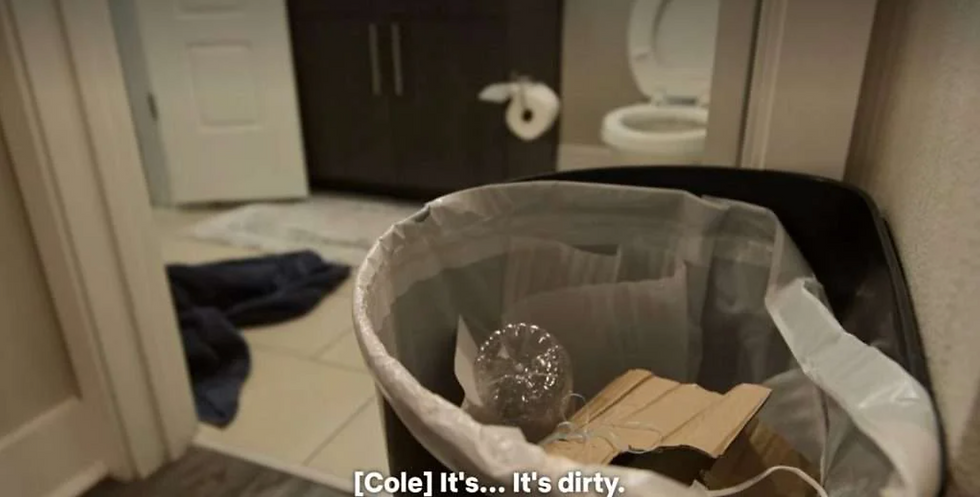
On the show, the cameras capture the beautiful, scripted moments, but they don’t always show the everyday grime of shared living. It’s only during the Apartment Reveal that the partners (and the audience) see the truth: the overflowing trash, the "borderline legendary" messy counters, and the dishes that have clearly been there for three weeks.
Cleaning your home works the exact same way.
A home can look "camera-ready" at first glance, but the real story of its maintenance is told in the spots most people are blind to. If you only clean the surfaces that "show," you’re just a reality TV editor cutting out the messy parts.
Watch for these "Camera-Blind" Red Flags:
The Soap Scum Sequel: Underneath soap dispensers and around the base of faucets. This is where gunk and minerals build up while you’re busy polishing the mirror.
The Hidden "Crumbs" Plot: Under small appliances like toasters or air fryers. If you haven't moved them lately, you're hosting a bug-inviting "buffet" in the dark.
The Baseboard Backdrop: Along the trim where dust and pet hair settle. They might not be the "main character," but dirty baseboards make the whole room feel like a "rerun".
The Pro Lesson: Don't Clean for the "Edit."
Professional cleaners know that true freshness comes from the details. Regularly hitting these overlooked spots ensures your home feels clean even when the "producer" (or your mother-in-law) isn't looking.
Tip: Use an old toothbrush or a crevice cleaning brush to tackle the tight corners behind faucets and under appliances.
Hack: Wipe your baseboards with a dryer sheet; it cleans the dust and leaves a repellent layer so they stay "scene-ready" longer.
6. MEETING THE FAMILIES: Are You Marrying the Armoire?
On Love Is Blind, meeting the families uncovers the traditions, expectations, and history a partner carries with them. Physical Spaces can have similar moments.
During organizing projects, these “family meeting” moments often appear in the back of a closet, the corner of a basement, or the shelves of a garage. Places where inherited or gifted items quietly accumulate over time.
Reclaiming your space often starts with reviewing this “legacy” and deciding what truly deserves a place in your life today. Keeping a few meaningful pieces is one thing. Holding onto everything out of obligation is another. The goal is to make room for a home that reflects how you live now.
Watch for these "Legacy" Red Flags:
The Style Mismatch: Just because something was passed down doesn’t mean it has to take center stage in your home. If an heirloom clashes with your space or doesn’t reflect your current style, it may be time to rethink where, or whether, it belongs.
The “Just in Case” Collection: Inherited kitchenware, extra dishes, or old gadgets often stick around “just in case.” But if they haven’t been used in years, they’re simply taking up valuable space. Keep the pieces you actually use and let the rest go.
The Storage Time Capsule: Boxes of family items tucked into closets or storage areas can quietly accumulate over time. If you haven’t opened a box since the last time you moved or reorganized, it’s worth revisiting what’s inside and deciding what truly needs to stay.
The Verdict:
If you are keeping an item out of obligation rather than inspiration, it’s a red flag. Real love for your home means only committing to what brings you joy. It's okay to say "I don't" at the altar of decluttering.
7. The Altar: Choosing Yourself Over the "Subpar"
In the most viral Love is blind moments, a contestant reaches the altar and chooses themselves. They realize that just because they spent time in the "experiment" doesn't mean they owe it a "Yes" if the connection is subpar. They walk away because they deserve something extraordinary.
Your home deserves that same level of self-respect.
Many people live with "subpar" organizing systems or cleaning habits because they feel obligated to keep them going. But the Altar is your moment to be honest: if a system makes you feel frustrated, messy, or "less-than" in your own space, you have to say "I don't."
The "Hard No" Red Flags:
The "Sunk Cost" System: You spent money on expensive bins that actually make your life harder. Saying "I don't" is a win for your sanity.
The "Good on Paper" Habit: You tried the "5 a.m. deep clean" because an influencer told you to, but it makes you miserable. It’s okay to admit that you aren't "in alignment" with that lifestyle.
The Deal-Breaker Item: That one piece of furniture or decor that you've always hated but felt too guilty to toss. If it doesn't fit your core values, it’s time for a breakup.
The Pro Lesson: Choosing Yourself is the Greatest Love Affair.
Professional organizers empower you to set boundaries with your stuff. Honoring your home means only saying "I do" to things that truly serve your peace and well-being.
Tip: Audit your home for "subpar" moments. If an area consistently makes you sigh in frustration, it’s a sign you need to choose your own happiness and ditch the system.


Comments